
 By The Metro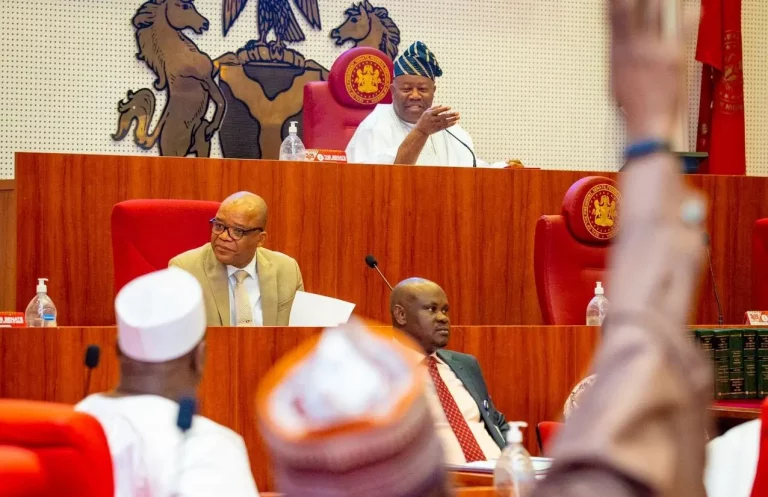
Senate Standing Orders Amended to introduce stricter eligibility rules for presiding and principal officers, a move that could significantly reshape leadership contests in the National Assembly ahead of the 2027 elections.
The amendment, approved after a lengthy executive session presided over by Senate President Godswill Akpabio on Tuesday, sets new conditions that prioritise experience and continuity. The revised Senate Standing Orders Amended framework effectively narrows the pool of senators who can aspire to key leadership roles in the upper legislative chamber.
Under the updated rules, any senator seeking to contest for the offices of Senate President or Deputy Senate President must have served at least one full term of four years in the Senate. This requirement means that only lawmakers with prior Senate experience will be eligible to occupy the chamber’s highest positions.
The Senate Standing Orders Amended rules also introduce a structured ranking system for nominations. Preference will be given in the following order: former Senate Presidents, former Deputy Senate Presidents, former principal officers, senators who have served at least one term and finally, lawmakers who previously served in the House of Representatives. Only in the absence of all these categories can a first-term senator be considered for nomination.
For principal offices such as Chief Whip, Deputy Whip and Minority Whip, the criteria are even more stringent. A senator must have served two consecutive terms immediately preceding the next Senate inauguration to qualify. This provision ensures that only ranking lawmakers with continuous legislative experience can occupy these strategic positions.
By implication, the Senate Standing Orders Amended decision effectively bars many incoming senators from contesting for influential leadership roles in the 11th Senate. Politicians, including some serving governors planning to move to the Senate in 2027 with ambitions of securing top offices, will not qualify unless they meet the experience threshold.
The development has generated mixed reactions across political circles. Supporters argue that the Senate Standing Orders Amended provisions will strengthen legislative stability by ensuring that only experienced lawmakers handle leadership responsibilities. According to them, this will improve continuity, institutional memory and efficiency in parliamentary proceedings.
However, critics have described the amendment as “self-serving”, suggesting it is designed to protect the interests of current presiding officers and ranking senators. They argue that the rules create an uneven playing field by giving experienced lawmakers what appears to be a right of first refusal over key leadership positions.
Findings also indicate that even within the Senate, several members may be affected by the changes. Senators who have not completed two consecutive terms by 2027 will be unable to contest for principal offices, thereby reducing competition and limiting opportunities for newer lawmakers.
Another major implication of the Senate Standing Orders Amended framework is its impact on political strategy ahead of the 2027 elections. Aspirants will now need to reconsider their ambitions, as eligibility is no longer based solely on political influence or party backing but also on legislative tenure and ranking.
Supporters of the reform insist that leadership of the Senate requires deep institutional knowledge and experience, which can only be gained over time. They maintain that the amendment is necessary to ensure order, discipline and effectiveness in legislative business.
On the other hand, opponents warn that the Senate Standing Orders Amended changes could limit inclusiveness and discourage fresh perspectives within the leadership structure. They fear that restricting eligibility too tightly may weaken internal democracy within the Senate.
As preparations for the 2027 elections gather momentum, the Senate Standing Orders Amended rules are expected to play a decisive role in shaping leadership contests. Whether the changes will ultimately strengthen the institution or restrict democratic competition remains a subject of ongoing debate within Nigeria’s political landscape.