
 By The Metro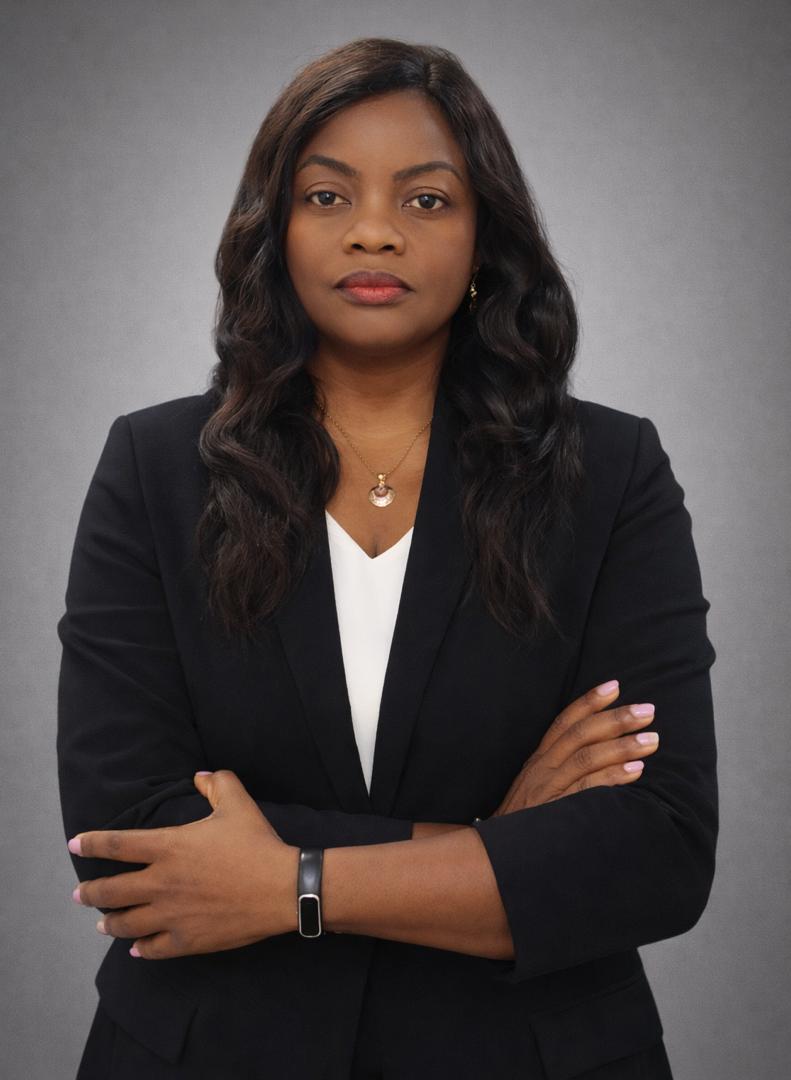
By: Theresa Aisha Mebitaghan
Nigeria’s event industry is widely recognised for its speed, creativity, and ability to deliver under pressure. Events are frequently executed within very tight timelines, with teams working extended hours to meet client expectations. On the surface, delivery often appears seamless. However, behind the scenes, the reality is usually far more complex.
Many event businesses function without clearly defined systems. Processes are rarely documented, roles lack structure, and execution is heavily dependent on specific individuals being available and capable. Although this approach can deliver short-term results, it carries significant operational risk.
Common issues such as missed deadlines, last-minute adjustments, and inconsistent delivery often arise. Teams rely on memory instead of structured processes, and instructions are communicated informally. When pressure increases, these weaknesses become more apparent. What may look like flexibility is often simply the absence of structure.
Architect and business strategist Theresa Aisha Mebitaghan, widely known as Tessie, identifies this as one of the key limitations within the industry. “If your business only functions when you are present, then you don’t have a system,” she explains. “You have dependency.”
This dependency creates serious consequences. Business owners become involved in every decision, every client conversation, and every stage of delivery. As demand increases, so does the workload, yet the systems required to support that growth are often absent. The outcome is usually burnout.
In many situations, owners find themselves simultaneously managing client expectations, coordinating vendors, supervising event setups, and resolving issues. Without structured systems in place, delegation becomes difficult. Even when teams exist, they tend to operate as extensions of the founder rather than as independent, structured units.
Tessie’s approach to this challenge is shaped by her background in architecture and construction project management, where complex work is broken down into clearly defined phases, responsibilities, and deliverables. Each stage is mapped out, responsibilities are assigned, and outcomes are measured against established standards.
“The objective is not to work harder,” she notes. “It is to build systems that can function without constant supervision.”
In well-structured environments, execution does not depend on memory or improvisation. Instead, it follows a clear process. Team members understand their roles, timelines are set in advance, and quality is maintained through systems rather than reactive fixes.
Without such structure, scaling becomes difficult. As client numbers increase, pressure rises but efficiency does not improve. Errors become more frequent, service delivery becomes inconsistent, and growth begins to stall—not due to lack of demand, but because the business lacks the operational capacity to support it.
This pattern is common across the industry. Initial success generates demand, but without systems in place, that demand exposes underlying operational weaknesses. Businesses that once performed strongly begin to struggle under the weight of expansion.
Through the BeeZees Group, Tessie has spent over a decade developing structured execution models, applying operational discipline across projects in both the United Kingdom and Nigeria. Her focus is on transforming creative delivery into repeatable systems that can scale without compromising quality.
These frameworks are expected to feature prominently in her upcoming industry session in Lagos, where she will share practical systems applied across both markets. For many professionals, the conversation is shifting away from simply managing events towards building businesses capable of managing themselves.
In an industry driven by visible output, the systems behind that output are often overlooked. Yet they ultimately determine whether a business sustains its success or collapses under the pressure of its own growth.