
 By The Metro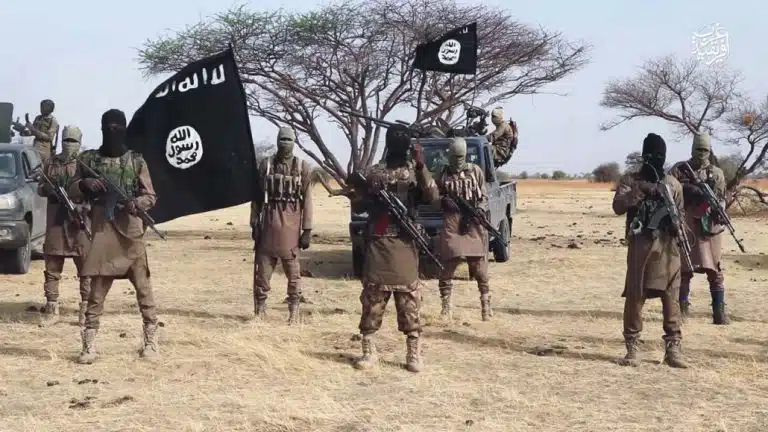
Fresh concerns have emerged over Nigeria’s security situation following the Defence Headquarters (DHQ) confirmation that fighters linked to Jama’atu Ahlis Sunna Lidda’awati wal-Jihad (JAS) were behind the recent school abductions in Oyo State.
Security analysts say the development points to a widening security challenge involving displaced insurgent elements and existing kidnapping networks, raising fears of further spread beyond the North-East.
The DHQ said intelligence linked the attackers to JAS fighters who were forced out of their original enclaves through sustained military operations.
Director of Defence Media Operations, Major General Markus Kangye, said the terrorists involved in the Oyo operation were among insurgent elements displaced from their traditional bases and seeking new areas to operate.
“The recent incidence of kidnapping in Oyo State was clearly perpetrated by terrorists of the JAS Group that have been dislodged from other parts of the country due to high-intensity operations being conducted all over,” Kangye had said in a statement.
JAS, formally known as Jama’atu Ahlis Sunna Lidda’awati wal-Jihad, traces its roots to the movement founded by Mohammed Yusuf in Maiduguri in the early 2000s. The group became known for its violent opposition to Western education and state authority, later fragmenting after years of military pressure and internal divisions, particularly following the death of Abubakar Shekau.
The group has been linked to mass killings, suicide bombings, school attacks and large-scale abductions, including the 2014 Chibok schoolgirls kidnapping, one of the most widely referenced cases of insurgent violence in Nigeria’s history.
The killing of Michael Oyedokun, a teacher abducted during the Oyo school attack, has further heightened concern, with analysts noting similarities with previous extremist tactics in the North-East.
Security analyst and kidnap incident management specialist Sam Otoboeze said recent attacks show a shift in kidnapping operations in Nigeria.
“Kidnapping in Nigeria is no longer merely a ransom business. It increasingly overlaps with terrorism, banditry, cult violence, political intimidation, revenge attacks and organised criminal activity,” he told Vanguard.
Experts say schools remain strategic targets due to their symbolic value, visibility and psychological impact, often used to create fear and undermine public confidence in security systems.
Attention has also turned to geography, with security experts pointing to forest corridors across Oyo, Ondo, Ekiti, Ogun, Kwara and Kogi states as key operational routes for armed groups. The Oke-Ogun axis has repeatedly been identified as a vulnerable corridor due to its terrain and inter-state links.
Forensic and criminal intelligence expert Alfred Ononugbo also told Vanguard that weak monitoring of forest regions continues to enable criminal activity.
“When our control systems collapse and policing does not effectively manage these developments, criminals operate with absolute impunity,” he said.
Recent attacks across parts of the South-West, including Oyo, Ekiti, Ondo and Kwara states, have reinforced concerns over worsening insecurity, with victims drawn from schools, families and rural communities.
Consultant psychiatrist Dr Sunday Amosu said extreme violence is often used deliberately to instil fear and demonstrate dominance.
“The motive is power has shifted in our favour and we will exercise it. Who can question us? Execution, killing, decapitation, whatever name we call it, is a show of power,” he said.
Clinical psychologist Hauwa Bello said such actions are designed to maximise psychological shock and fear.
“That’s why you call them terrorists because they want to terrorise people. And how do you terrorise people? It’s by doing something that is extreme,” she said.
Criminal psychologist Dr Ahmed Tanimu Mahmoud said the pattern reflects deeper structural weaknesses and shifting motivations within armed groups.
Security experts warn that if displaced insurgent elements continue integrating into kidnapping networks in the South-West, Nigeria could face a more complex and layered security threat.
They called for stronger intelligence gathering, improved surveillance of forest corridors and deeper community involvement in security operations.