
 By The Metro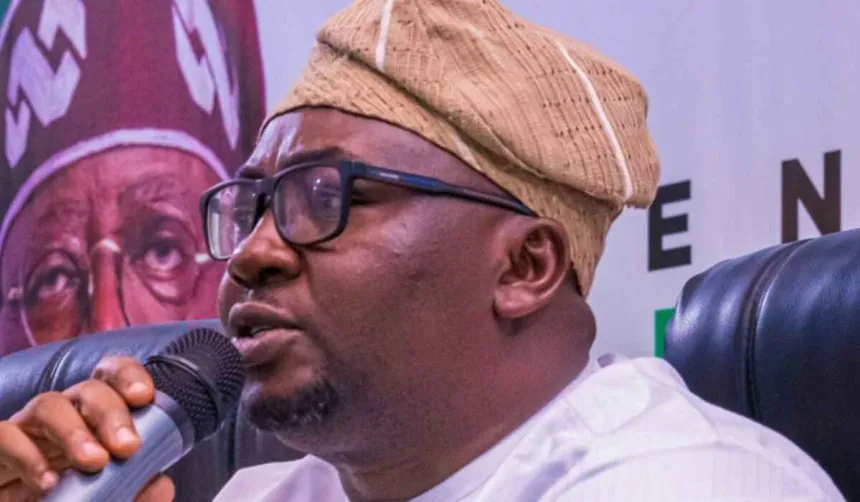
The Minister of Power, Adebayo Adelabu, has tendered a public apology to Nigerians over the crippling and persistent outages witnessed in the last month, admitting the blackout has deepened hardship across homes, businesses, schools and industries amid the scorching dry-season heat.
The apology was delivered during a press conference on Tuesday in Abuja.
It comes amid intensifying public frustration over erratic power supply, particularly as soaring temperatures across the country have increased electricity demand for cooling.
In an unusually direct acknowledgement of the crisis, Adelabu said, “I want to apologise to Nigerians, officially now, coming from me as the Minister of Power, for this temporary issue that is leading to hardship being experienced, especially during this dry season, where there is so much heat everywhere.
“Businesses are being affected, schools have been affected, and industries have been affected. It is not our wish to find ourselves in this situation, but it is due to some factors that are actually beyond our control.”
Despite the current setbacks, the minister assured Nigerians that relief is imminent, giving a definitive timeline for improvement in supply.
“I can tell you, with the committee that we have set up, and commitments from gas suppliers, and the timeline for repair of the gas pipelines, two weeks from now, we should start seeing improvements in supply. Two weeks,” Adelabu said.
According to him, the government already has visibility on when key repairs, particularly those involving facilities operated by Seplat Energy, will be completed, a development expected to restore gas flow to power plants.
He explained that a special committee has also been constituted to monitor compliance with domestic gas supply obligations by producers, a long-standing issue blamed for constraining electricity generation.
“We already have a committee that is working on this to track compliance with the domestic supply obligations of these gas companies to our power plants,” he said, adding that improved payment flows to gas suppliers would further incentivise supply.
Findings indicate that Nigeria’s power sector, largely dependent on gas-fired plants, has been hit by disruptions in gas supply, worsened by pipeline maintenance challenges and liquidity constraints.
Adelabu acknowledged these structural issues, noting that while they were not entirely within the government’s control, efforts were ongoing to stabilise the system.
“We are working on it 24/7 to make sure that we go back to the trajectory of 2025, when Nigerians commended us for a good job well done,” he said.
The minister also reiterated the Federal Government’s commitment to ramping up electricity generation to 6,000 megawatts before the end of 2026, describing the current disruption as a temporary deviation from a broader improvement plan.
“Power generation will improve, transmission will improve, distribution will improve, and that 6,000 megawatts will be achieved before the end of this year, and Nigerians will be better for it,” he assured.
He added that the government’s ambition is not just to recover lost ground but to surpass previous performance levels.
“If we could provide such service in 2025, this is 2026, we are willing to do more, to even do better,” Adelabu said.
Nigeria’s electricity sector has long struggled with a mix of structural and operational challenges, including inadequate gas supply, ageing infrastructure, transmission bottlenecks, and persistent liquidity issues across the value chain.